
Everything You Need to Know About Equine Tendons
What to do in case of accidents or emergencies?
The quick answer to this question is:
Call your vet.
However, help is not always immediately available, due to the distances or the time the emergency occurs.
Since knowing when something will happen is impossible, it's even more important to be prepared.
This guide explains how to act quickly and buy time until a veterinarian comes to the rescue.
Let’s start from the beginning
The first step to recognizing if your horse has a problem is to be aware of his normal condition.
Therefore, you should observe your horse on a daily basis, or as often as possible.
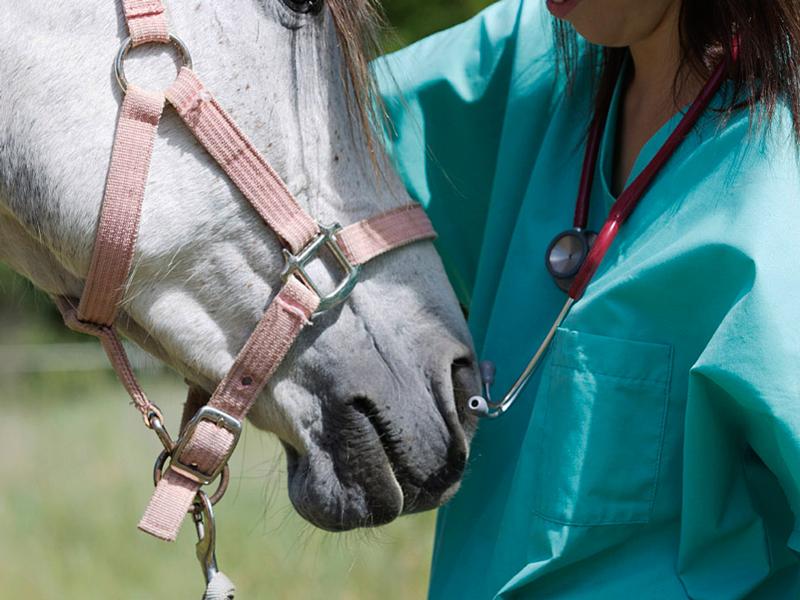
What should I observe?
Temperament and behavior: Observe your horse's temperament and recognize changes. For example, if your horse is habitually active and moving, apathy and disinterest can be warning signs.
In his behavior, you can also recognize whether there is a veterinary emergency. For example, if your horse kicks the ground, brings the mouth to its belly, sweats a lot, or rolls around repeatedly, it may indicate colic and you should call a vet immediately.
Skin: By grooming your horse frequently, you will know its normal skin condition and recognize changes that can cause problems, such as inflammation, wounds, lumps, or warm spots.
Abdominal sounds: You should hear sounds in the horse's gastrointestinal tract. With a stethoscope (or your ear), you can hear gurgling and bowel sounds near the abdominal wall, between the last rib and the hip bone. Listen on both sides to know your horse's normal sounds. Missing abdominal sounds can indicate colic, which requires quick vet assistance.
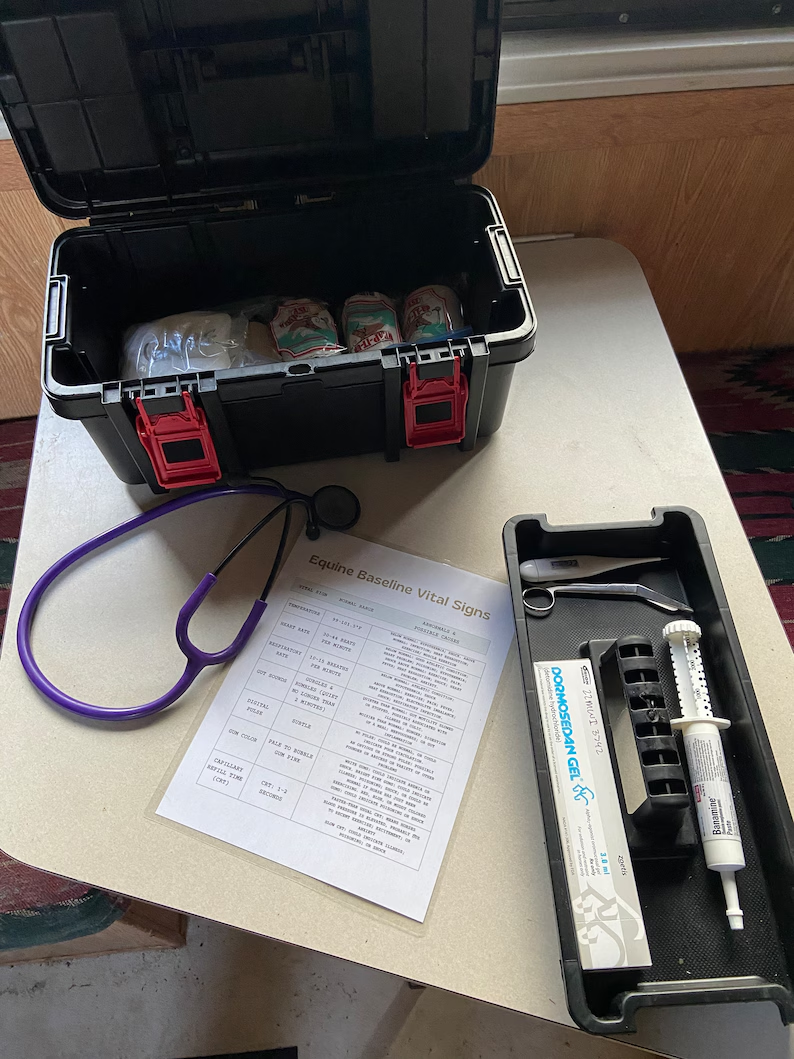
Hydration: The capillary filling time test is the most accurate way to determine if your horse is drinking enough water. Check the mucous membranes in the mouth, they should be moist and pink. Press your finger firmly against the gums and let go. If the area does not turn pink again within a second or two, the horse could be dehydrated or have circulatory problems.
Vital signs: Measuring your horse's temperature, heart rate, and breathing helps identify normal values and you will quickly notice any abnormalities or sudden changes.
A healthy horse at rest should have a body temperature between 37-38°C.
Temperature in horses is usually measured with a veterinary thermometer in the equine’s rectum.
The thermometer must be introduced long enough to provide a reliable reading, no shorter than 2 or 3 minutes.
In case you don't have a thermometer, you can check your horse's ears for signs of fever. Warm ears generally indicate fever, while cold ears are normal.
Regular monitoring allows you to establish the usual body temperature and to quickly detect changes.
The heart rate is reflected in the pulse. Vets usually measure it with a stethoscope, but with a little practice, you can do it manually.
The pulse can be checked in any large artery, but the facial artery at the bottom of the jaw is the easiest to find.
Place two or three fingers (not the thumb, which has its own pulse) in the space between the cheek and the jaw. Where the bone is located, the artery feels like an umbilical cord.
Press a little harder with your index finger than with the other fingers to increase the pulse.
Count the beats for 30 seconds. Double this number to get the pulse rate per minute (bpm).
The pulse rate of a horse is strong, regular, and constant. The ideal values are based on age and training.
A horse in good physical condition should have a rate of 70 bpm within ten minutes after intensive training and below 60 bpm after ten minutes of moderate exercise.
An adult horse has an average resting pulse rate of 30-40 bpm and can reach 120-150 bpm after intense activity. For a newborn foal, the pulse rate is between 70 and 90 bpm and for older horses it’s between 35 and 45 bpm.
Any significant deviation from these values can indicate stress and illness.
A resting pulse rate above 80 bpm may suggest dehydration, colic, heart or lung problems, or even infections.
On the other hand, very low rates below 20 bpm can indicate hypothermia, heart disease, or severe circulatory disorders.
Regarding breathing, the normal value of an adult horse at rest is 8 to 14 breaths per minute.
To count them, you can simply observe the nostrils or how the sides of the body expand and contract with each breath. (Don't put your hand near the horse’s nose, just observe.)
These values may change during activity or training, but regular observation will help you quickly determine when the breathing is outside the normal range.
These basic parameters serve as general monitoring and diagnostic tools to detect alarming situations.
However, there are also common emergencies that can be identified with the naked eye, such as wounds.
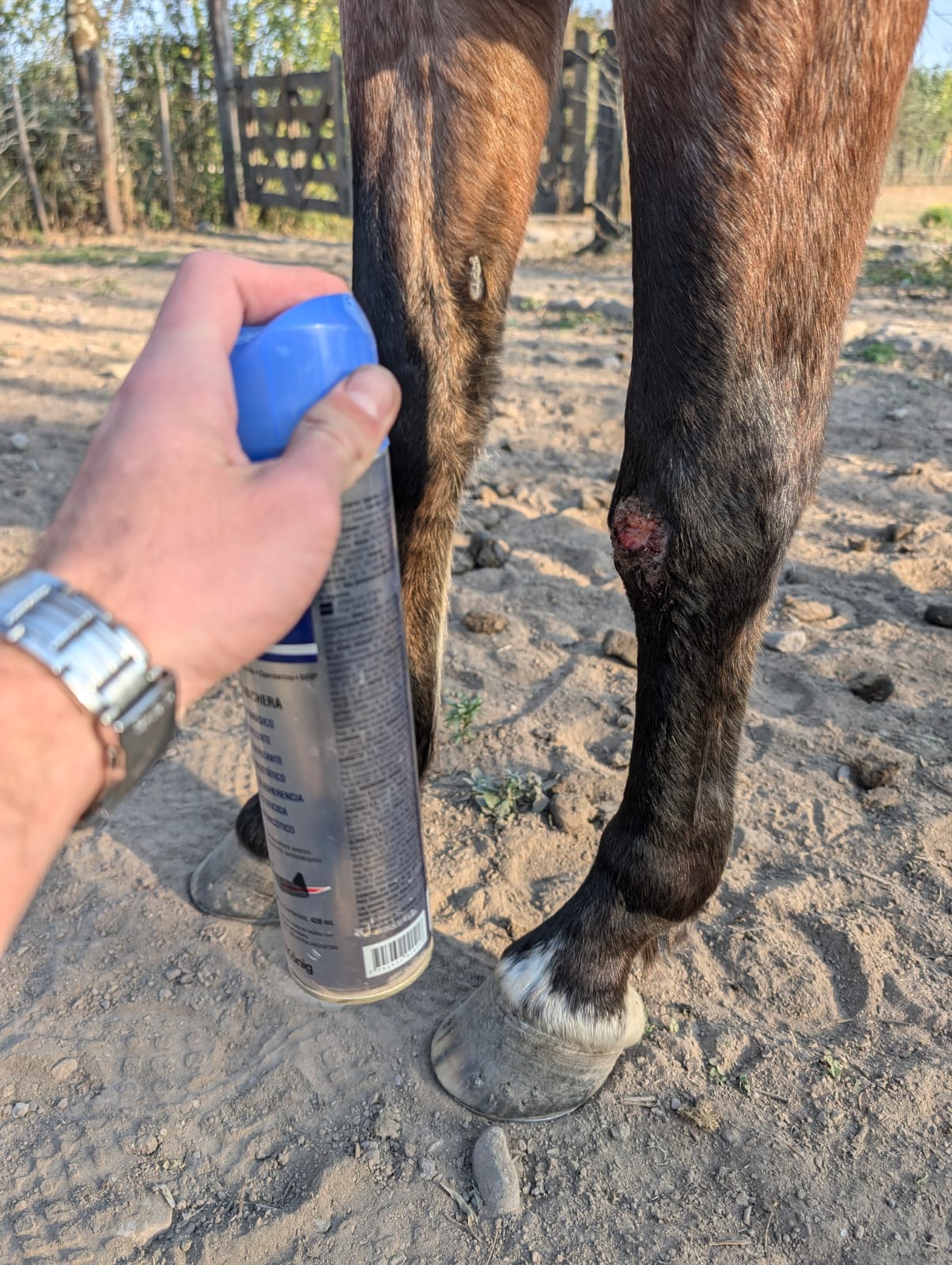
What to do with an injured horse
Horses' behavior is controlled by their flight response, which often leads to injuries when they bump into buildings, fences, or natural objects in their way.
Simple wounds can be treated without the assistance of a professional, but bigger wounds should be treated by a veterinarian.
But first: What is a wound?
It is an injury with or without exposed tissue.
First, determine the type of wound in order to decide the next steps.
Incisions are typically caused by surfaces with cutting edges, resulting in clean and well-defined edges. Depending on the depth, only the skin or also muscles, tendons, and nerves can be affected, leading from light to heavy bleeding.
Puncture wounds are usually caused by nails, large thorns, and even bites. Although the surface area is usually not large, they can be very dangerous because it is difficult to estimate their depth, and they are easily infected by bacteria entering the deeper layers. For this reason, these wounds should be treated by a vet.
Lacerations are among the most common wounds in horses, usually caused by sharp objects with irregular edges (like wire or cans) that tear open the tissues, resulting in irregular wound edges and often contaminating the injury.
An avulsion wound is a severe form of laceration, where part of the tissue is entirely torn and detached, potentially causing damage to tendons and bones. This commonly occurs in the ankle joints and metatarsal bone.
It is crucial to clean the wounds and remove contaminating foreign bodies.
Scratches and abrasions are surface injuries caused by rubbing or friction, e.g. from the saddle or other objects. Although they may not bleed much, they can be painful and irritating. These wounds are often underestimated but can easily result in infections if not properly disinfected and treated.
Contusions appear after a blow and, although they usually don't result in external bleeding, they can cause pain and inflammation. More serious contusions can lead to internal bleeding, so immediate vet care is crucial.
Once you have identified the type and severity of the wound, you should consult a veterinarian immediately in these cases:
The wound is heavily contaminated with dirt or particles
Heavy bleeding
Your horse limps or has difficulty moving
The wound gapes or extends into deep tissue
If you are able to treat the injury yourself, please consider the following recommendations.
Be cautious and keep in mind the following:
If your horse is in severe pain, nervous, or has suffered severe trauma, it may react in dangerous ways.
Therefore, if you are not familiar with the basic techniques of handling a horse under these conditions, you should not provide first aid, as it can have unintended consequences for both of you.
If you have assistance and can proceed safely, consider the following recommendations:
Stay calm and avoid acting impulsively.
Carefully wash your hands and use latex gloves.
Check the wound for any foreign objects, either that caused the accident or others such as leaves, insects, etc. Try to remove them, preferably with clean tweezers.
If the wound is fresh and the horse allows it, wash the wound with a sterile solution or antiseptic soap for horses, and then rinse it with water from a tube. Cold water helps blood vessels contract and reduces bleeding.
If the wound is not fresh and there is dirt in it, clean it with water and a low concentration of an antiseptic solution (povidone-iodine 0.001%) to prevent tissue damage. This should be done gently, without scrubbing the wound, preferably with a syringe.
For small wounds or scratches, you can apply an antiseptic in the recommended concentration and let it dry (be cautious, as it may cause an allergic reaction in your horse)
Severe injuries should only be treated by a vet. If veterinary care is not available where you are, disinfect the wound, apply an antiseptic and antibacterial ointment on a sterile gauze, and place it on the wound. Secure with an elastic bandage, but not too tightly.
If your horse is bleeding heavily, it should remain still and hydrated until the vet arrives.
Even for minor wounds, various supplies are necessary for treatment.
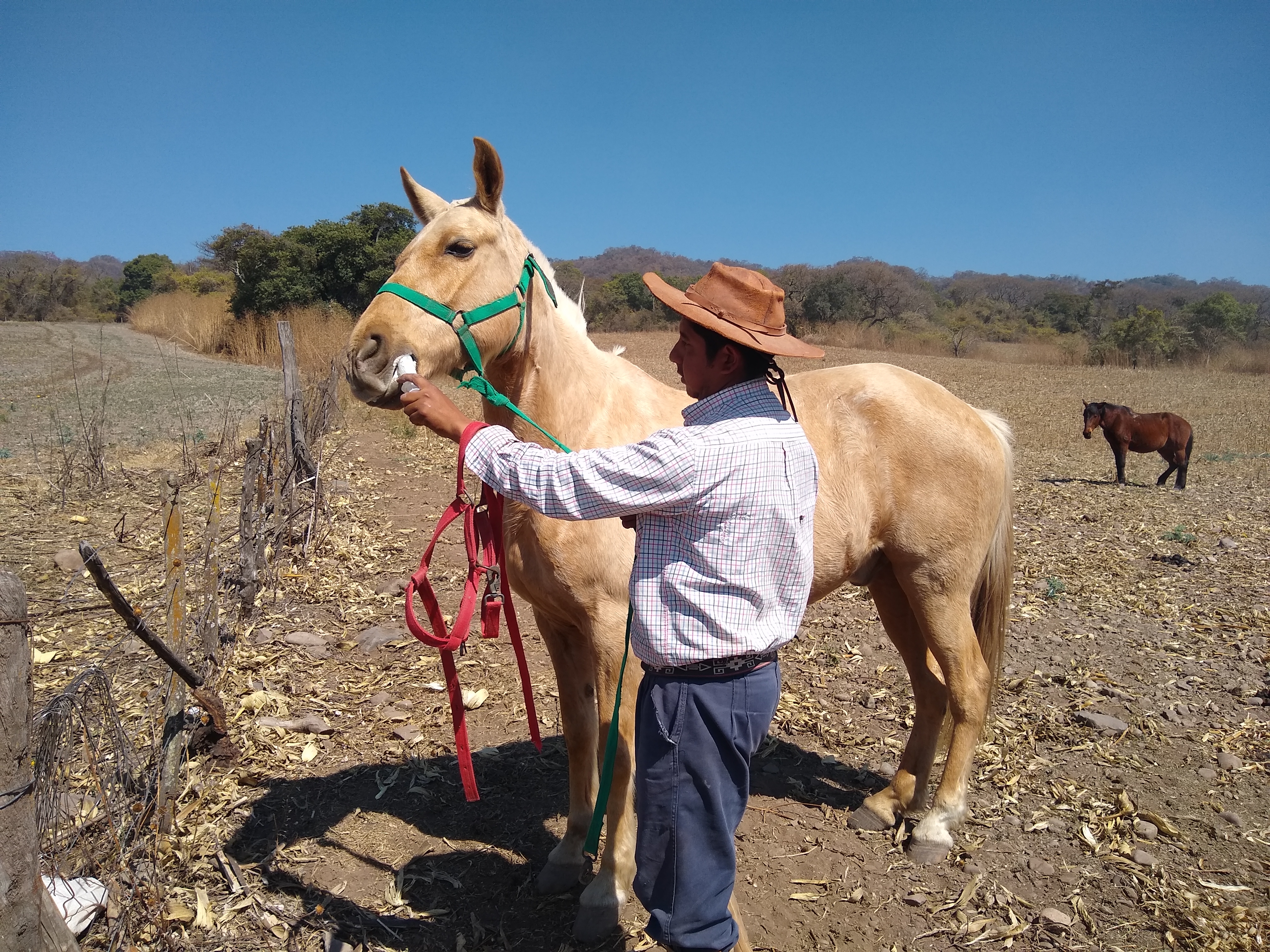
What should a first aid kit contain?
The list can be endless, but for the most common accidents, the first aid kit should contain the following items:
Disposable gloves (several pairs to change for different wounds)
Round-tip scissors
Rectal thermometer for horses (and pure petroleum jelly for use)
Sterile solution for wound cleansing
Iodine solution (povidone-iodine) or chlorhexidine for disinfection (pay attention to the concentration and use always small quantities to avoid damaging the tissues or affecting recovery).
Sterile wound gauzes and dressings
Adhesive tapes and self-adhesive bandages
Elastic bandages for tourniquets
Antibiotic ointment
Anti-inflammatories for internal and external use (Attention! Only administer them with veterinary prescription).
Syringe with medication for colic The pharmaceutical drug should contain flunixin meglumine, which is analgesic, anti-inflammatory, antipyretic, non-steroidal and non-narcotic, and is four times more potent than phenylbutazone.
Regularly check the first aid kit for the condition and expiration date of the bandages and drugs.

Every minute counts
In case of an emergency, every minute is crucial. While it is impossible to foresee and prevent all potential accidents, there are certain steps to consider to minimize the impact.
Here are some helpful tips:
Ensure that your veterinarian has emergency care available and in case they don’t, you should have another veterinarian's contact number on hand.
Store the contact numbers of the vets in your mobile phone and also in a visible place in the barn, e.g. on the first aid kit.
Be familiar where the nearest vet practice is and with their operating hours and also know the quickest route to get there.
If you don't have a permanent groom, identify someone who can assist you in an emergency until the vet arrives or in case you need to drive your horse to their practice.
If you have a horse trailer, always keep one first aid kit in it and the other one in the barn.
When in doubt, it is better to exaggerate and call the vet rather than underestimating symptoms that could indicate a serious problem.
Vet assistance is vital, but your knowledge and preparedness can be crucial to preventing a minor issue from escalating into a serious problem.
Continúa leyendo
Este artículo es exclusivo para miembros.
To view this blog, please complete the form
Access full content
Comments (0)
No comments yet.
You might also like
Paul Coudenys and Entre Orejas: Unique Horseback Riding Experiences in South America
Why Do Horses Rear Up? Causes and Solutions
Separation Anxiety in Horses
The Evolution of the Horse: Interview with Dr. Marcos Imberti
The Reflection of Human Emotions in Horses: Allies in Assisted Therapy and Equine Therapy


Comments
Leave your comment